Saturday, April 23, 2011

Video Dump


Exciting match between France and Serbia Under 19 years old teams. Winner is qualified for the U19 European Championshio in Spain this summer:


http://www.dailymotion.com/TeamRadiOSSA#videoId=xi9rwt


FYI: France is a longtime Wing-T team, now playing some wing / veer offense.


FYI2: French RB #28 and French DB #31 are Julien's players.


Some practice clips of Holgorsen practice #1 (from Houston)


Resurgence of Mike Vick


Here is a capture of two performances for comparison
Vs Chicago (under pressure from behind)


Vs Indianapolis (in a close shootout)


Wednesday, April 13, 2011

Frontline on Football


My brother sit me right down and he talked to me
He told me that I ought not to let you just walk on me
And I'm sure he meant well yeah but when our talk was through
I said brother if you only knew
you'd wish that you were in my shoes

You just keep on using me until you use me up

An episode of Frontline (“Football High”) aired last week and it has been making its rounds through the football interwebs and rightfully so. It touches many of the various issues that have established themselves as the fingerprint of our current era of high school football.  The piece did it’s best in the short time allotted to address a litany of themes in today’s game that cannot be ignored (despite our best efforts in some cases).  Because of time constraints, the editors had to settle for a shotgun-method of presenting these affairs to the public, sacrificing quantity over depth.  I wanted to take a bit of space to highlight and briefly comment (I don’t have any answers) on a few of the concerns presented.
  • Program Building and the influence of pressure
  • Player size consistently increasing to proportions not previously experienced
  • Concussions being taken seriously with increased research addressing brain trauma (see links below)
  • Impact and the role of equipment to mitigate unnecessary injury - Tom Talavage, Purdue University
  • Cumulative effects of small impacts to the head – Dr. Ann Mckee, Boston University
  • Safety Enforcement – absence of trainers to professional evaluate athletes (due to budget / lack of regulation)

Player Safety (and the perspective in which we regard coaches)

Watch the full episode. See more FRONTLINE.
“The incentive structure is all wrong.
Coaches are under intense pressure to win games.  It’s the only thing that they are judged by.  So if you have a player with concussion symptoms and you send him back in the game and has a second concussion, which is always worse than the first, there is no penalty as a coach for that.   If you take the kid out of the game and take away the kid’s helmet and you loose the game – there’s a penalty for that.”

Easterbrook makes an astute observation here and it was just worth repeating.  I found the commentary right before this excerpt more deflating (decreasing availability of athletic trainers), but his point about how we value coaches succinctly captured what this epidemic is all about. 

Mega Programs from Mega Churches
At the risk of being offensive and pissing off every reader, I believe there is something here that I feel deserves a closer look.  I don’t think there is some boogeyman conspiracy at play, but there IS a formula available (and being used across the Nation) which is able to tie (affluent) money, cutthroat competitiveness, and shameless ego into a maelstrom of domination.

“In the mid-1990s we decided that we really wanted to become a national football program…..and with that everything began to advance…
image
How do you explain what’s happened here? You have this little football program that has emerged to a national stage.   The only way I can explain it is the favor of god – that’s it”.
- Ronnie Floyd, Head Coach Shiloh Christian
But it takes more than divine intervention. It takes money and commitment.

I felt this except from the special was priceless, because behind these benevolent remarks resides something a little more powerful at work than feel-good rhetoric (politics / money / greed).  It begets a culture that routinely straddles the line of ethics and the cult of personality.  I wrestled with this sort of idea before, where ethical boundaries blur for treatment of players/families through social influence (by invoking the will/perception of the gods).  The culture of ultra-win-at-all-costs-competitiveness can be a monster itself to handle, but adding the trump card of god’s guilt (and the petty social politics within any church) is a recipe for abuse.

For the record, I have nothing but respect and admiration for the Shiloh Christian (and the many private schools built with this same model) Program and I’m not even suggesting that they aren’t doing everything above board.  The Frontline piece just happened to pick them, but there are dozens of other programs that could’ve been the focus for what they were illustrating.

If you had the means and ability to create the best possible environment for your students, why wouldn’t you? Wouldn’t it be your duty to do exactly that (and why not for your athletes as well)?  I am not even one of those guys who begrudges the disparity between public versus private school programs.  There are many public schools that are run in near the same fashion.  This “formula” that I’m referring to requires a perfect balance which isn’t easy to come by and when lacking oversight from outside parties (away from the self-contained echo-chamber of “win”) it becomes a monster that grows, breeding abuse.

Limitless Potential for High School Programs
“If you’re in a great high school football program, you will spend more time working in high school than you will in college.
image
Within a full seven day week you have 20 hours to complete all football related activity under NCAA rules.  There is not a great high school program in America that does anywhere near that.  They’re considerably over that.”
- Walt Williams, Sports Promoter
I don’t know who the hell Walt Williams is, nor can I speak for his title, but everything he explained was dead on the money.  This is a subject I’ve shared with my close coaching friends the past few years (especially every time I hear the lazy excuse of “players can’t do such-and-such”).  High school football really is wide open on what we can get away with and how coaches can creatively use their time on campus (and off).  Again, like mentioned above, it straddles the line of being competitive and being unethical.  There are many things we, as coaches, can do to saturate our players with skills and knowledge to build them as players (with little regulation), but finding the right mix between too much and not enough can be a moving target.

This all comes back to Bill Withers at the opening of this post.  The allure and euphoria that is American football is something that really transcends rational thought.  The “football high” (intentional double entendre) speaks to the compulsive nature that is created because these visceral life moments and may not be something we can soberly evaluate like an economic equation.  Football, the game, will eat up players and coaches alike without ever returning the ‘love’ / investment made by the participant.  The fever of “the game” always comes at a price and something we can all easily lose sight of…. it isn’t the stats, the scores, the wins or losses.  It is the relationships with the players and with yourself (what you end up revealing about your own character).

That isn’t to dismiss any of the legitimate concerns presented by this piece (quite the contrary),  but for any person who has played high school or college ball and “got it” (the experience), the decision to jeopardize our health and in some cases, peace of mind, is one we wouldn’t even second-guess.  The thrill and fulfillment of sacrificing yourself for the benefit of those close to you (and those people sharing alike), to create something bigger than all of you combined is ultimately what this game is about.

Monday, April 11, 2011

Rip / Liz (Revisited)

As touched on earlier, this coverage adaptation to 3 deep zone fills the holes of 8-man fronts vs 1-back.  I’ve consolidated the lecture and video for (hopefully) a better illustration of the concept.

Thursday, April 7, 2011

Cover 2 DB Drills: Raheem Morris


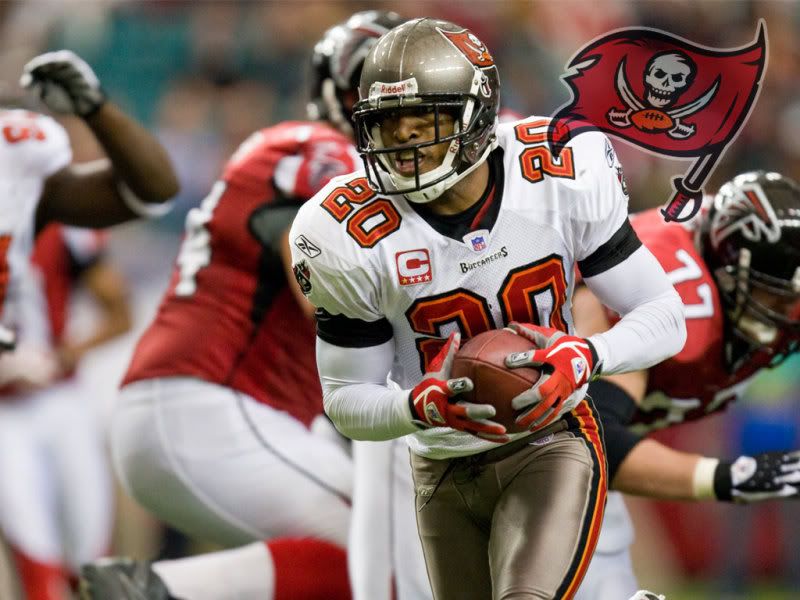
Some cornerback drills care of Raheem Morris during the dominant years of the Tampa Bay Buccaneers defense featuring one of the most physical corners in recent memory, Ronde Barber. 

There are some great stimulus-response drills to handle #1 receiver stems (inside, outside, vertical) and run-support leverage.  This starts with individual work handling stems/breaks, then moves to leveraging specific routes (out of C2).  With group work, these same recognition work is carried over and speeds up the “looking for work” process when #1 clears.  The film concludes with team practice clips against Gruden’s offense (against Cover 2).


Be sure to check out past Cover 2 entries for more in-depth writing.

Sunday, April 3, 2011

Altering Post Snap Tempo

Much ado has been made of the importance of tempo in modern football.


ept_sports_ncaaf_experts-765833194-1254415226 Nowadays, it is less about what you are doing (option, power, air raid), and more about HOW you do it (huddle, different tempos, crazy fast).


The reasons why one goes no huddle are well versed. The main reason, as we have learned from our basketball counterparts, is to control the tempo of the game. The offense sets the pace, and whatever the philosophy, CONTROLLING that pace is a decided offensive advantage.


While some live in extremes (see Oregon), most teams find value in altering the tempo, either to the specific situation (2:00 time or kill clock time), or to simple prevent the defense from “settling in”. Like placing defenders in run/pass binds, attacking multiple areas along the LOS, and vertically and horizontally stretching zone droppers, varying tempo is just another way to make a defense stress, and ultimately, to break.


Freaking-Out


The point is, if you aren’t up on varying your pre-snap tempo, you need to be.


While this article is about POST snap tempo, it was necessary to talk through the philosophy and importance of pre-snap tempo in order to appreciate how post snap variance is also vital.


I’m going to use the offense I know as an example, but this is applicable to every system.


For our purposes, I want to examine two mainstays in the shotgun spread: zone read and flash screen.


The zone-read was the revolution of the past decade. By adding an option control on the backside of IZ, shotgun teams found they could run the football as well as their pro-style counterparts. Nowadays, a 6 man box is not in and of itself enough to keep a 10 personnel team from running the football.


The “ride and decide” meshing between the QB and RB creates a certain stimulus, to which the defense must react.


P_White_Zone_Read


Your “reaction” defenders (namely, LB’s and DB’s) must maintain gap integrity while diagnosing and discerning who has the football. By it’s nature, the zone read takes time to develop. While defensive pressure can disrupt other running plays, zone blocking was designed to be gap sound and prevent penetration. In general, the BIG plays on zone read (and zone in general) come when a defense starts acting (aka, poking and hoping), rather than reacting. The very nature of option football also takes advantage of flying around without purpose.


So, the best reaction (post snap) is to fit into your run responsibility, diagnose whom the ball carrier is, and THEN rally to him.


A heavy zone read team will get a defense into this type modus operandi within a couple series.


Our second play, flash screens, do so much for a spread team.


ept_sports_ncaaf_experts-975729872-1225470402


Beyond the purposes of this post, perimeter screens force defenses to occupy and play in space (must line up properly), and are easy ways to get the ball to an athlete (like Crabtree).


For the purposes of this article, they are also a great way to vary that post snap “ride and decide” stimulus of the zone read, of which the defense just got a steady diet.


Essentially, a flash screen has the same run fits as sweep, it just threatens about twice as fast.


So, we have moved from a play that requires a defense to be gap responsible and react slowly, to a play that demands they get there NOW! After a steady diet of either stimulus, the defense will be less ready (less conditioned) to handle the other, simply by virtue of having altered their post snap decision-making process.


I’m gonna call on my dogs to explain this a little more.


The bell rings, I get food.


The bell rings, I get food.


The bell rings, I get food.


The bell rings, I get food.


The bell rings, I get food.


The bell rings, I get food.


The bell rings, I get food.


The bell rings….Hey, where did all this slobber come from?


THE BIG POINT:


The analogy of a boxer has been used to describe many things as it pertains to offensive play calling, and we can now add helping to relate the idea of post snap tempo to the list.


A boxer switches between short jabs and big hooks/cross/uppercuts for many reasons. You pound (weaken) with your jabs. You get an opponent use to defending jabs, then, at the opportune moment, you throw one of the other aforementioned strikes to do real damage.


For our purposes, these strikes also compliment each other in the manner (speed and position) in which strike. Throw nothing but jabs, and you might as well be tickle fighting a real boxer, but when you can mix it up, changing the speed and position of the assault, your opponent can’t find a rhythm.


In football terms, keeping a defense “off rhythm” is the name of the game.

SIDEBAR